
Personnel Transport Equipment
Category
Spare Parts
Contact Us
What Is Personnel Transport Equipment ?
Personnel transportation equipment refers to vehicles designed for the safe and efficient transportation of personnel in specific areas or complex environments. Its core value lies in replacing inefficient or safety-hazardous commuting methods through specialized and scenario-based mobility solutions, ensuring the mobility, safety and comfort of personnel in project execution, field operations and other scenarios, so as to enhance the overall work efficiency and teamwork capability.
Main Uses and Applications:
- Large-scale engineering projects on-site commuting
In railroads, highways, energy construction and other construction projects, it is used to quickly dispatch engineers, workers and management personnel to efficiently circulate between different operating areas, temporary quarters and living areas, reducing time and physical exertion, and directly guaranteeing the project progress. - Field Exploration and Inspection
provides reliable transportation support for field work such as oil and gas exploration, power line inspection, forest protection, etc. It can cope with unpaved roads, slopes, deserts and other complex terrains to ensure that the work team and equipment arrive at the target area safely. - Internal transportation in large-scale factories and closed parks
In ports, mines, industrial parks and other wide-ranging areas, it undertakes inter-regional commuting tasks for employees, effectively connecting office areas, production units and auxiliary facilities, and optimizing the organization of internal logistics and human flow. - Emergency Response and Special Task Support
In natural disaster response or emergency tasks, it can quickly transport rescue teams, technicians and necessary equipment to sites that are difficult to be accessed by ordinary vehicles, so as to enhance the emergency response capability.
Personnel Transport Equipment One-Stop Provider
Personnel transportation equipment is designed for engineering projects, field operations and special terrain commuting, providing safe, efficient and reliable personnel transportation services. As an expert in the field, Deruna mainly focuses on two core models: ** project-specific pickup trucks**, which are both multi-functional in carrying people and goods, and can easily cope with complex road conditions at construction sites, making it an ideal choice for on-site scheduling and coordinated transportation of tools; and ** all-wheel-drive cross-country passenger vehicles (10-18 seats)**, equipped with all-wheel-drive system and high-bearing cross-country chassis, which are specially designed for collective group transportation, and are able to handle extreme terrains, such as deserts, mountainous regions and mud, ensuring that technical teams can quickly arrive at remote sites in formed formations. It can cope with extreme terrain such as desert, mountain, mud, etc., ensuring that the technical team arrives at the remote site quickly. These equipment are widely used in energy exploration, mining construction, power inspection, emergency rescue and other fields, significantly improving the mobility of personnel and project response efficiency. Choose Deruna to match your team with mobility protection that is truly adapted to harsh environments!
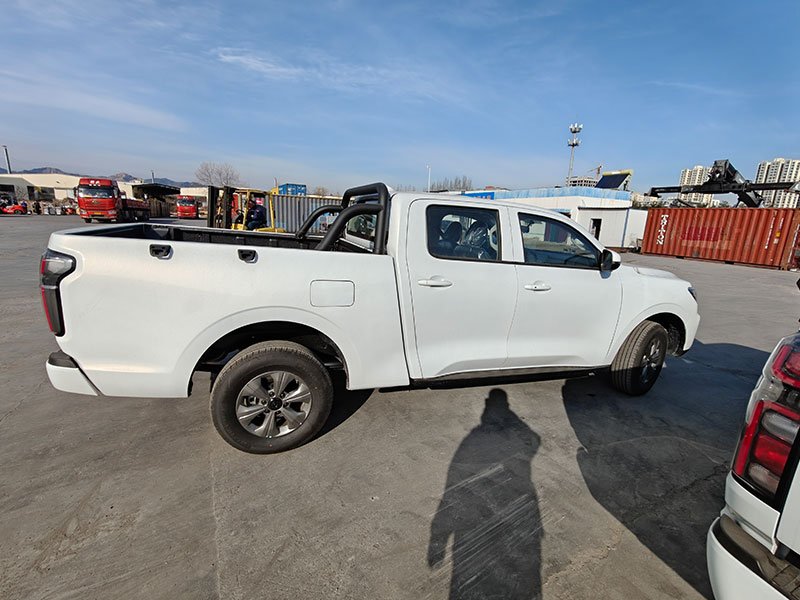
Pickup
- Energy Type: Diesel
- Maximum Power (kW): 108(147Ps)
- Transmission: 6-speed manual
- Price: US$ 38000-42000
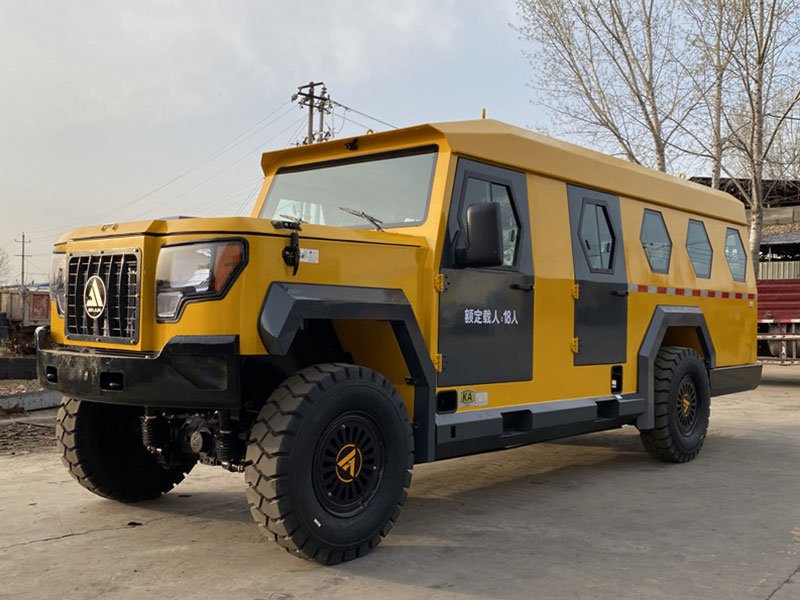
All-Wheel Drive Off-Road Passenger Vehicles
- Dimensions: 6169x1850x2300mm
- Power: 110kW
- Rated Passenger: 18
- Price: US$ 38000-42000
Why Choose Us?
Providing The Best Personnel Transport Equipment And High-Quality Spare Parts For Your Projects
**A:** Safety is the primary consideration. Professional personnel transportation equipment ensures safety through multiple designs:
- * **Vehicle Structure**: High-strength body, roll cage (ROPS), and sturdy chassis are used to ensure body rigidity and impact resistance.
- * **Active safety**: Equipped with full-time four-wheel drive system, limited-slip differential, ABS anti-locking system, and steep slope descent to cope with complex terrain.
- * **Passive Safety**: Includes three-point seat belts, non-slip treads, handrails, ample lighting and warning signs to ensure occupant boarding and alighting and ride safety.
- * **Compliance**: the vehicle meets all necessary on-road and off-road vehicle safety regulations.
**A:** This is where the **Project Specific Pickup** comes in. It offers flexible space configurations:
- * **Ride Space**: 4-6 crew members can comfortably ride in a double or row-and-a-half cab.
- * **Cargo space**: the separate rear cargo box can safely store tools, equipment, instruments and materials, avoiding the safety hazard of mixing people and cargo.
- * **Modifiability**: The cargo box can be retrofitted with toolboxes, shelves or covers to further optimize space utilization.
**A:** Professional all-wheel drive off-road passenger vehicles are built for extreme terrain:
- * **Drive system**: true all-wheel drive or time-shift 4WD with off-road low gears to provide great torque and off-road capability.
- * **Passing Parameters**: with high ground clearance, large approach/departure angles, and professional off-road tires, it’s easy enough to handle rough road conditions such as deep sand, mud, and gravel ramps.
- * **RELIABILITY**: The sturdy suspension system and chassis design guarantee durability for long-term driving on unpaved roads.
**A:** This is a key question about total cost of ownership (TCO).
- * **Power**: It is usually equipped with a large-displacement, high-torque diesel engine, which ensures that there is sufficient power to climb and accelerate even under full load.
- * **Economy**: Although the absolute fuel consumption is not low, the high efficiency of diesel engines and the relatively low price of diesel fuel help control the cost. Choosing an engine that matches the load and road conditions is key to avoiding a “small horse-drawn vehicle” that is more fuel-intensive.
- * **Cost Consideration**: It is necessary to comprehensively measure the cost of purchasing a vehicle, fuel consumption, maintenance costs and the benefits of attendance, high reliability and low failure rate can effectively reduce the long-term cost of use.
**A:** Modern personnel transportation equipment has greatly improved comfort to maintain employee morale and productivity:
- * **Suspension**: The specially tuned suspension filters road vibrations effectively.
- * **Ride Space**: High-roof design provides ample head and legroom, and the seats are ergonomically designed to support long rides.
- * **Environmental Configurations**: Powerful air conditioning system, good sealing (dust and noise prevention), USB charging port, storage compartment and other configurations are readily available.
**A: **Compliance is essential:
- * **License plate and roadworthiness**: It is necessary to clarify whether the vehicle has the Certificate of Vehicle Conformity and the Certificate of Conformity of the Whole Motor Vehicle, and whether it can apply for a yellow license plate (for large buses) or an ordinary license plate (for pickup trucks) and legally drive on the road.
- * **Non-road vehicles**: If the vehicle is only used in the completely closed plant area, it is necessary to clarify the relevant management specifications.
- * **Company Qualification**: Ensure that the manufacturer has the World Manufacturer Identification Code (WMI) and the corresponding production qualification, so as to avoid purchasing “assembled vehicles” that cannot be licensed.
A: Many professional manufacturers provide customized services, common modifications include:
- Painting: Painting of corporate logos and specific colors.
- Functional retrofitting: adding police lights, sirens, car radio, overhead air conditioning, extra lights, explosion-proof equipment, etc.
- Interior layout: adjusting the seating layout, adding tool cabinets, barrier fences, etc.
- Technical docking: reserving equipment installation interface and power supply for special industries such as surveying and mapping, inspection, etc.
A: Professional vehicles need to have the ability to adapt to the whole climate:
- Extreme cold areas: high power heater, diesel preheating system, antifreeze, snow tires, etc. are required.
- Very hot areas: High-power cooling air-conditioning, extra engine cooling, flat tires, etc. are required.
- Rainy season/swampy areas: emphasize the wading depth of the vehicle, the sealing of the electrical system, and the mud-draining performance of the tires.
- When shopping, you should clearly inform the supplier of the climatic conditions of your project location to get the most suitable configuration.